A month or so ago, I did a post on raising your own lamb for meat production. We have since had our butcher out and had a couple big days of creating and preserving our meat! WARNING - if you don't like the gory details and pics, don't read on!
Most people who raise meat animals accept that killing their animals is a necessary chore. I don't love that aspect of it, but neither am I ashamed of it. The raising and killing of domestic animals has been with us since the beginning of man. I am confident that our livestock live well during their lives, they have plenty of space to roam around in, always are fed and watered well, and the butcher we use takes pride in doing the job of ending their life very quickly and efficiently.
This year we slaughtered 2 beef steers and 10 grown lambs. We slaughter on one Sunday and hang the meat for a week in a coolroom, for ultimate tenderness. Its always an early start so we beat the heat and the flies.

Before the lambs are slaughtered they are stunned, with a small hand-held machine that renders them immediately unconscious. Straight away their throat is cut, and within about a minute they are bled and hanging up, ready for skinning and gutting. At this stage we only save the kidneys, (and tongue of the beef)
A week later it is another early start and we are back ready for the cut up. I make sure I have plenty of freezer bags, and all our coolers are clean and ready for packing the meat into to cart into the house.
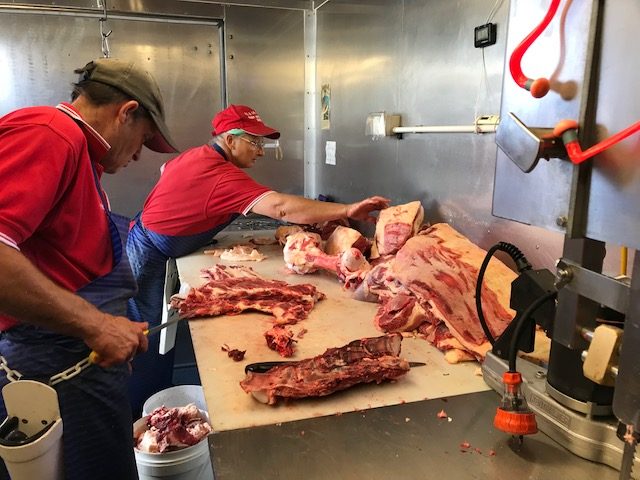
Cam and I did our own slaughtering and butchering for a long time. However a couple of years ago we made the decision to get a professional butcher in to do it for us. We chose our particular butcher, Kevin, one for his use of the "stun" process during slaughter, and also because of his butchering set up. He arrives with a fully kitted out truck, with stainless steel lining and all his saws and mincers, etc contained within. It is air conditioned for the warmer days and at the end of the day, he drives all the cleanup away with him.
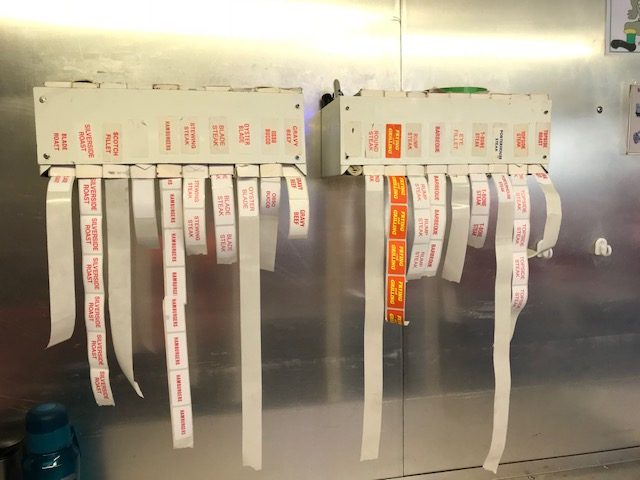
We usually start with the beef, as it takes the longest, roughly 2 hours per beast. Each beast is quartered prior to hanging, so Kevin brings one quarter at a time out of the Coolroom and into his truck for processing. As Kevin and his wife cut up each batch of meat, I'm "bagging up" the meat with the correct portion sizes for our family, and then labelling the bags, so I know what is what in the freezer.
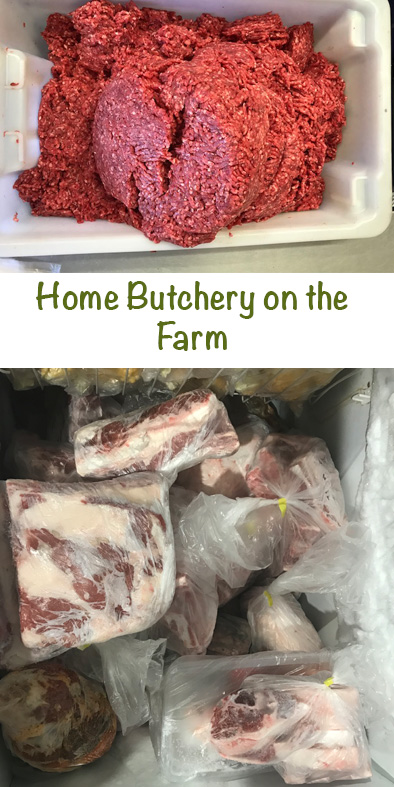
90% of the beef is done by hand. All the steaks are hand cut, the flaps are rolled and seasoned into rolled roasts, the scraps of meat are carefully cut from the bone ready for mincing into ground beef. There's a few decisions to be made along the way - do we want T-bones or have them deboned into Porterhouse steaks and eye fillet (I always go for the porterhouse and eye fillet - the bones take up a lot of extra room in the freezer and often put holes in the bags). How much corned meat do we want vs schnitzels... etc.
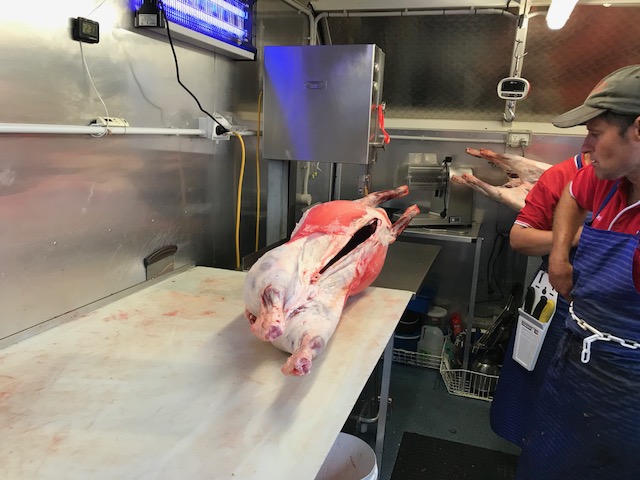
A quick lunch and we move onto the lamb - much quicker, about half an hour each. The lamb are hung whole for the week. So the first thing Kevin does is cut them down the middle, into two long halves, with his band saw. Then into a forequarter and a hind quarter. A lot more of the lamb is done with the band saw - all the chops are cut from the rib section, the shanks are cut from the shoulders and leg roasts, the roasts are cut into smaller manageable pieces.
Its a long day, but also a very satisfying day. I love watching our freezers slowly filling up, knowing we have all this wholesome meat to see us through the year.
The only job left to do now, regarding the meat, is to rearrange the freezers a couple of days later. Obviously the meat on the outside of the freezers will freeze quite quickly, but it can take quite a while for the meat on the inside to freeze down. So we literally take all the meat out of each freezer and put it back in with the well frozen meat on the inside this time, and the meat that is still soft against the edges of each freezer.
Its also a good opportunity to stack the freezers with a lot more care. We arrange them so that we each layer has a range of cuts rather than having all the scotch fillet in one layer and all the roasts on another, etc. This way I don't have to fish through the layers to have variety in our evening meals. I also do a check list of all the different cuts, so I know how much of each we have. This is really handy when I'm doing my meal planning each month.
Well hopefully this has given you an overview of our butchering process. I do have a good PDF of the exact steps that are involved when slaughtering and butchering lamb, so I can put this as a download if there is interest.
Please feel free to leave any questions in the comments below.
No responses yet